


Black Forest Labs Launches FLUX 3 for Images, Video and Audio
Black Forest Labs has introduced FLUX 3, a multimodal artificial intelligence model designed to generate and edit images, video and synchronized …
Type a keyword and matching services will appear here instantly.
Click the heart icon on any AI service card to keep it here for later.
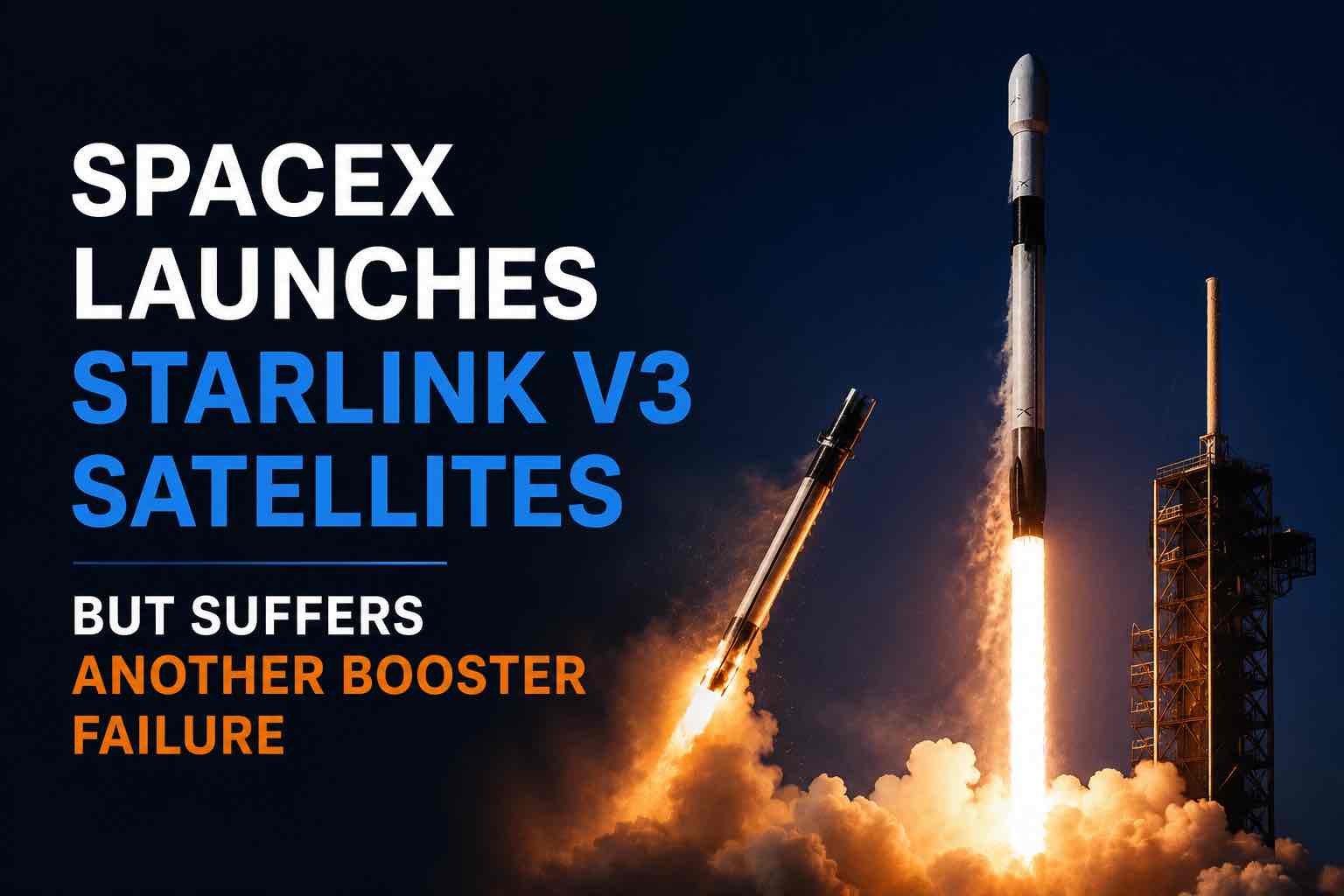
SpaceX successfully deployed its first operational Starlink V3 satellites during the 13th test flight of Starship, marking a major step for the company’s next-generation internet network.
However, the SpaceX Starlink V3 launch also ended with another failure of the Super Heavy booster, which was unable to complete its planned simulated landing in the Gulf of Mexico.
First Starlink V3 deployment
Starship launched from SpaceX’s Starbase facility in Texas carrying 20 upgraded Starlink satellites.
The spacecraft released them roughly 200 kilometres above Earth during the suborbital flight. The satellites briefly connected with the existing Starlink network before re-entering the atmosphere and burning up as planned.
The demonstration was intended to test Starship’s satellite deployment system rather than place the spacecraft into permanent orbit.
Starlink V3 satellites are designed to provide greater bandwidth and faster internet service than earlier generations. Their larger size also means SpaceX needs Starship’s significantly greater payload capacity to deploy them efficiently.
Booster misses landing test
The Super Heavy first stage completed separation but encountered problems during its return.
Five engines reportedly failed to reignite correctly, preventing the booster from slowing as planned. It hit the Gulf of Mexico harder than expected instead of completing a controlled simulated landing.
The result resembled the booster failure during Starship’s previous test flight in May. That incident prompted a Federal Aviation Administration review before SpaceX received approval to continue testing.
The latest failure shows that reliable booster recovery remains one of the most difficult parts of the Starship development programme.
Starship returns intact
The upper-stage Starship completed most of its planned objectives.
It travelled halfway around the world, tested an engine restart and survived atmospheric re-entry before making a controlled splashdown in the Indian Ocean. The vehicle remained largely intact after landing, an improvement over earlier flights that ended with major damage or explosions.
SpaceX also tested changes to the heat shield. Six of the Starlink satellites carried cameras and sensors that collected information about the spacecraft during re-entry.
The results could help SpaceX develop a vehicle capable of returning to Earth frequently without requiring extensive repairs between flights.
Why the mission matters
Starship is central to SpaceX’s plans for expanding Starlink.
The company wants to use the rocket to deploy larger batches of V3 satellites, increase network capacity and support direct satellite connections to ordinary mobile phones. Starship is also expected to play a major role in NASA’s Artemis lunar programme and SpaceX’s longer-term Mars ambitions.
SpaceX expects regular Starlink V3 launches to begin by the end of 2026, although that timeline will depend on the rocket reaching greater reliability.
Flight 13 therefore delivered mixed results. The successful satellite deployment and improved Starship landing demonstrated important progress, but the repeated booster failure shows that the fully reusable system SpaceX is trying to build is not yet ready for routine operations.
Receive our latest updates about our products & promotions
Black Forest Labs has introduced FLUX 3, a multimodal artificial intelligence model designed to generate and edit images, video and synchronized …

Microsoft has launched two new internally developed artificial intelligence models as it works to reduce the cost of operating AI …

Anthropic has launched Claude Opus 5, its latest high-performance artificial intelligence model for coding, research, financial analysis and long-running agent workflows. …