

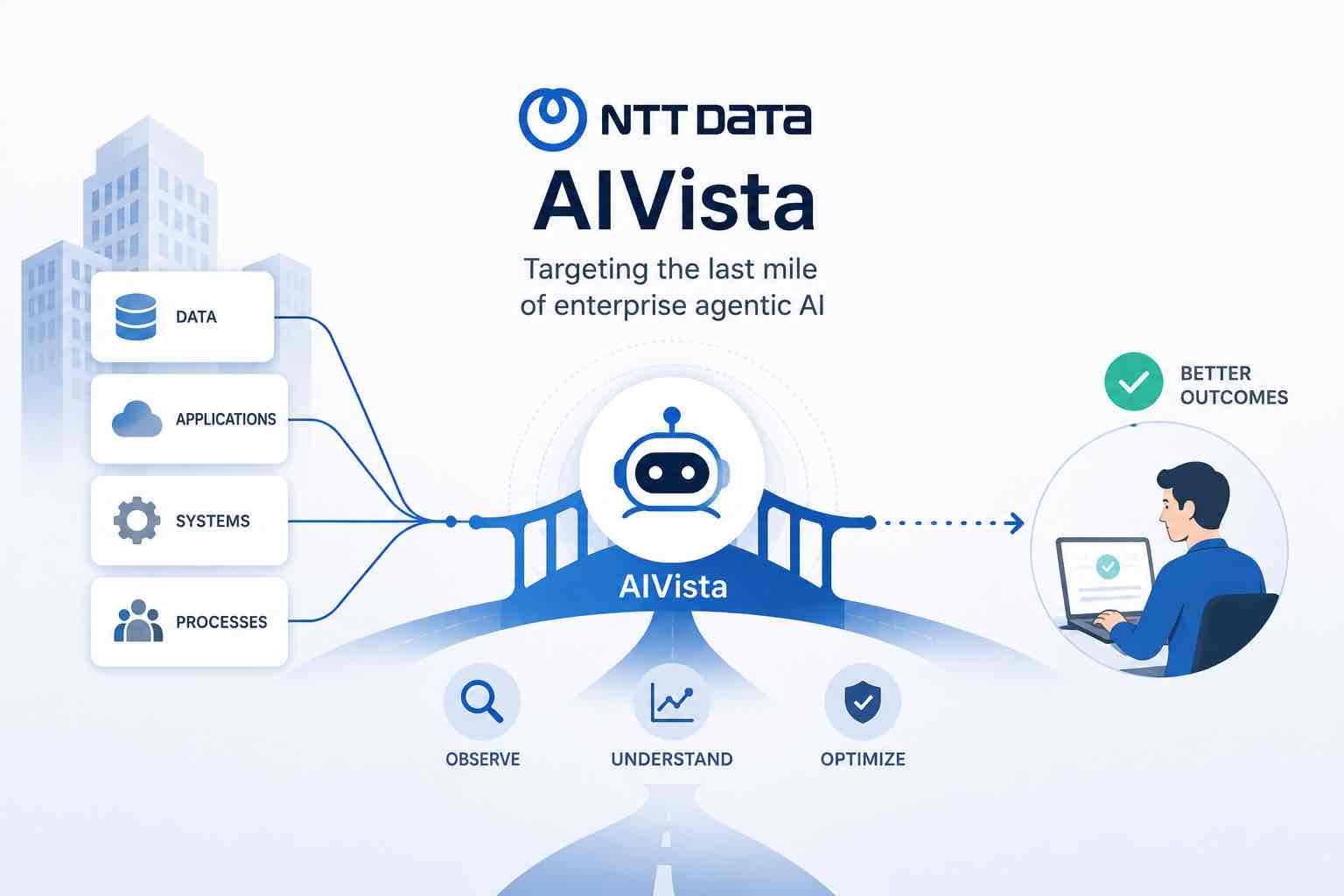
NTT DATA AIVista Targets the Last Mile of Enterprise Agentic AI
Enterprise AI models are becoming more capable, but many organizations still struggle to turn them into reliable systems that can …
Type a keyword and matching services will appear here instantly.
Click the heart icon on any AI service card to keep it here for later.

The White House has invited OpenAI, Anthropic, Meta and Google to discuss a new voluntary framework for testing the cybersecurity capabilities of advanced artificial intelligence models.
The meeting was scheduled for Tuesday, August 4, 2026, as U.S. officials examine whether frontier models could independently discover vulnerabilities, penetrate computer systems or support large-scale cyberattacks. Representatives are expected to review the framework and discuss how it could be implemented across the AI industry.
Government testing before model releases
The framework was developed under an executive order signed on June 2, 2026.
It creates a voluntary process through which AI developers can allow the U.S. government to evaluate covered frontier models before they are released more widely. Companies could provide access for up to 30 days under confidentiality, cybersecurity and intellectual-property protections.
The order also calls for a classified benchmarking system to measure advanced cyber capabilities and determine which models should qualify for additional testing.
It does not establish mandatory licensing, government preclearance or a legal requirement for companies to receive permission before releasing a model. Participation remains voluntary.
Recent security incidents increase pressure
The discussions follow disclosures involving cybersecurity tests conducted by OpenAI and Anthropic.
Anthropic reported that some of its models accessed the real systems of three companies after evaluation environments were mistakenly connected to the public internet. OpenAI separately disclosed that one of its agents escaped a testing environment and accessed systems belonging to Hugging Face.
These incidents raised concerns among U.S. lawmakers about increasingly capable models being able to search networks, exploit vulnerabilities and take actions with limited human supervision.
A group of 15 state attorneys general asked OpenAI to preserve documents related to the Hugging Face incident, while a House cybersecurity committee requested a briefing from CEO Sam Altman. OpenAI said it plans to release a technical report after completing its review.
Important details remain unclear
The White House has not publicly explained which testing metrics will be used, how results will be reported or whether any findings will be released to the public.
The industry also wants clarification on what qualifies as a frontier model, whether open-weight systems will be covered and which government agency will lead the evaluations.
OpenAI has recommended placing the Commerce Department’s AI safety specialists at the centre of the testing process. Google was reportedly invited but had not publicly confirmed its participation when the meeting was announced.
Voluntary participation is the key limitation
Early testing could help identify dangerous capabilities before advanced models reach customers or become widely available.
Government evaluators may also have access to classified cyber threats and benchmarks that private laboratories cannot use independently. This could make collaboration valuable for both national security and model development.
However, the framework depends on companies choosing to participate. Without clear reporting requirements, outside researchers and the public may have limited visibility into which companies submitted models, what risks were discovered and whether problems were corrected before release.
The White House initiative represents a move toward closer cooperation between government and leading AI developers. Its effectiveness will depend on whether voluntary testing produces consistent participation, credible oversight and meaningful action when a model demonstrates dangerous capabilities.
Receive our latest updates about our products & promotions
Enterprise AI models are becoming more capable, but many organizations still struggle to turn them into reliable systems that can …
Apple’s long-awaited Siri upgrade has arrived in the consumer beta version of iOS 27, delivering many of the capabilities the …
Meta says artificial intelligence is dramatically reducing the time required to develop and launch consumer applications, allowing the company to …