

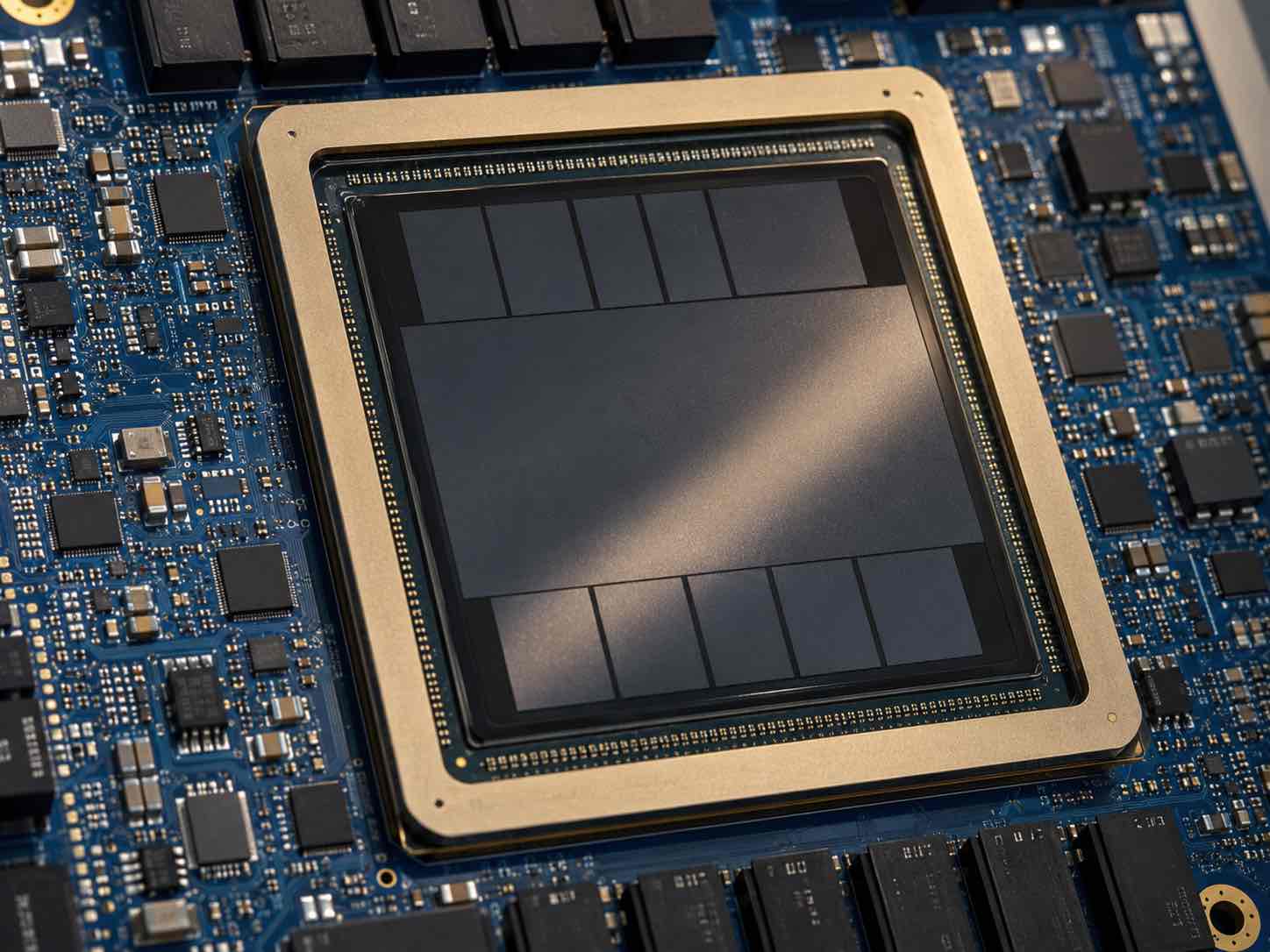
AMD Microsoft AI Deal Expands Azure Infrastructure and Lifts AMD Stock
AMD shares climbed around 5% after Microsoft announced plans to deploy the chipmaker’s latest artificial intelligence infrastructure across its Azure …
Type a keyword and matching services will appear here instantly.
Click the heart icon on any AI service card to keep it here for later.

The US-Japan AI collaboration has developed into a broad technology partnership covering artificial intelligence, semiconductors, quantum computing, research infrastructure and workforce development.
The initiative gained momentum during Japanese Prime Minister Fumio Kishida’s official visit to Washington in April 2024. The two governments identified advanced technologies as essential to economic competitiveness, national security and resilient supply chains.
Later agreements expanded the partnership beyond its original research programs, connecting government agencies, universities, laboratories and private companies across both countries.
A broader technology alliance
The United States and Japan bring different strengths to the partnership.
The US has a strong network of AI developers, cloud providers, chip designers and research universities. Japan contributes experience in robotics, electronics, manufacturing, advanced materials and high-performance computing.
Combining these capabilities could accelerate innovation while reducing dependence on concentrated or vulnerable technology supply chains.
The partnership also connects AI policy with investment, startup development, research security and international talent exchange.
University research partnerships
A major part of the original initiative involved university collaborations supported by $110 million in private-sector commitments.
Carnegie Mellon University partnered with Keio University, while the University of Washington began working with the University of Tsukuba.
Support came from companies including Amazon, Arm, Microsoft, NVIDIA and SoftBank Group, alongside Japanese business partners.
Research areas include:
Multimodal and multilingual AI
Artificial intelligence for robotics
Human-AI interaction
Life sciences
AI-assisted scientific discovery
The universities also planned joint projects, workshops, seminars and student programs. Industry partners can provide funding, computing resources and engineering expertise, while universities contribute independent research and specialist talent.
AI safety cooperation
The two countries are also working together on methods for evaluating and managing AI risks.
Japan established its AI Safety Institute in February 2024, while the United States created a related institution within the National Institute of Standards and Technology.
Their cooperation includes testing methods, risk-management frameworks, technical standards and AI system evaluations.
Synthetic media is another important area. AI-generated images, audio and video can be useful, but they may also support impersonation, fraud and misinformation. Research into authentication, content provenance and watermarking could therefore play a growing role.
In November 2024, the US and Japan joined other governments in launching the International Network of AI Safety Institutes to support shared research and evaluation practices.
Semiconductor supply chains
AI development depends on advanced processors, memory, manufacturing equipment, packaging technologies and specialised materials.
The United States and Japan are working to improve semiconductor research, supply-chain transparency and workforce development across both advanced and mature technologies.
Japan has strong capabilities in chipmaking materials and manufacturing equipment. The US leads in several areas of processor design, cloud infrastructure and AI accelerators.
Closer cooperation could help both countries build more resilient semiconductor supply chains. However, new manufacturing facilities require large investments, substantial energy resources and experienced engineers.
Long-term workforce planning will therefore be as important as government funding.
Quantum computing cooperation
Quantum technology is another major part of the partnership.
The US National Institute of Standards and Technology and Japan’s National Institute of Advanced Industrial Science and Technology have discussed research priorities, standards and supply-chain resilience.
Japan’s RIKEN research institute has also worked with Quantinuum to combine quantum systems with high-performance computing infrastructure.
Commercially useful large-scale quantum computers remain under development. However, the technology could eventually support materials science, chemistry, optimisation, cybersecurity and scientific modelling.
These projects show that the partnership extends beyond generative AI and includes the computing infrastructure required for future scientific breakthroughs.
Technology workforce development
Research laboratories and computing systems have limited value without enough skilled professionals to operate them.
The bilateral initiatives include student exchanges, technical workshops, entrepreneurship programs and cooperation between universities and companies.
These programs can expand the number of AI researchers, semiconductor engineers and technical specialists in both countries.
They can also improve the commercialisation of academic research by connecting scientists with companies, investors and international development teams.
Partnership expansion
The cooperation continued to grow after the original 2024 announcements.
In October 2025, the United States and Japan signed a Technology Prosperity Deal covering AI, quantum computing, biotechnology, space, 6G telecommunications and fusion energy.
The agreement included closer coordination between AI standards and safety institutions, along with stronger research-security measures.
In June 2026, the US Department of Energy and Japan’s Ministry of Education, Culture, Sports, Science and Technology announced plans for a combined $1 billion investment over five years, subject to future funding approval.
Each country plans to contribute $500 million toward AI-supported scientific discovery, advanced computing and research infrastructure.
Participating organisations are expected to include US national laboratories, RIKEN, the University of Tokyo and Japan’s National Institute for Materials Science.
Researchers may also gain access to major computing systems, including US Department of Energy infrastructure and Japan’s Fugaku supercomputer.
Global AI impact
The partnership could influence the global technology market in several ways.
Combining American software and cloud expertise with Japanese robotics, hardware and manufacturing capabilities may accelerate research and commercial development.
Shared AI testing and safety standards could also influence how companies and governments evaluate advanced systems internationally.
Cooperation in semiconductors and quantum computing may help diversify supply chains and reduce exposure to individual suppliers or regions.
The initiative also shows that global AI competition is increasingly organised around international alliances rather than domestic investment alone.
Challenges remain. The two countries must coordinate different regulatory approaches, protect sensitive research and ensure that funding commitments produce measurable results.
The long-term success of the US-Japan AI collaboration will depend on how effectively the announced partnerships are implemented. However, artificial intelligence and advanced computing are clearly becoming central parts of the wider strategic relationship between the two countries.
Receive our latest updates about our products & promotions
AMD shares climbed around 5% after Microsoft announced plans to deploy the chipmaker’s latest artificial intelligence infrastructure across its Azure …

AI agents are moving out of prototype mode and into real team workflows. The biggest shift is not just better …
As the number of AI tools expands, discovery becomes its own problem. Buyers need trust, curation, and enough context to …