


US-Japan AI Collaboration Expands Into a Strategic Technology Partnership
US and Japan Expand Strategic AI and Technology Partnership The US-Japan AI collaboration has developed into a broad technology partnership …
Type a keyword and matching services will appear here instantly.
Click the heart icon on any AI service card to keep it here for later.
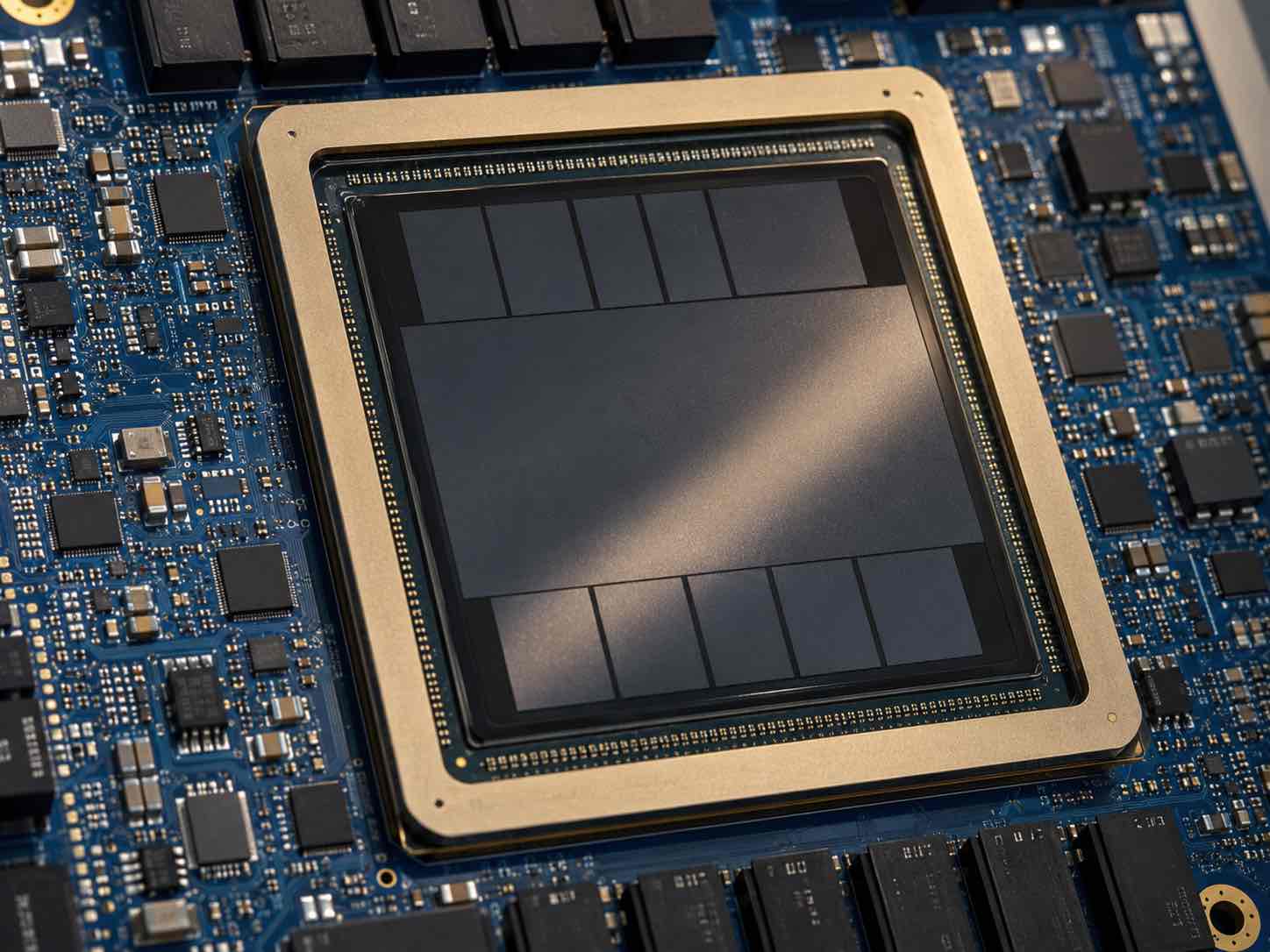
AMD shares climbed around 5% after Microsoft announced plans to deploy the chipmaker’s latest artificial intelligence infrastructure across its Azure cloud platform.
The expanded AMD Microsoft AI deal covers Instinct accelerators, EPYC server processors, Pensando networking technology and AMD’s ROCm software platform. Microsoft will use the systems for its own AI services and make them available to Azure customers.
Microsoft selects AMD Helios
The centrepiece of the agreement is AMD Helios, a rack-scale AI system designed for large inference workloads.
Helios combines AMD Instinct MI455X accelerators with sixth-generation EPYC “Venice” processors, Pensando networking and ROCm software. AMD expects to begin shipping the platform to customers, including Microsoft, during the second half of 2026.
Microsoft plans to use Helios for frontier AI models, reasoning systems, search applications and agent-based workloads. The technology will also power Azure ND MI455X v7 virtual machines for enterprise customers.
The agreement shows that AMD is competing for complete AI infrastructure deployments rather than supplying Microsoft with individual processors.
New Azure virtual machines
Microsoft also announced two Azure virtual machine families based on AMD’s upcoming EPYC processors.
Azure HDv2 will target AI data processing and agentic workloads. Potential applications include data preparation, reinforcement learning, search and the coordination of large groups of AI agents.
The systems are expected to provide nearly 500 physical CPU cores, four terabytes of memory, local NVMe storage and high-speed Azure Boost networking.
Azure HXv2 will focus on high-performance computing tasks such as engineering analysis, scientific simulation and electronic design automation. These virtual machines will offer 176 EPYC cores, increased memory capacity and fast InfiniBand connectivity.
The new services demonstrate that CPUs remain important to AI infrastructure. They prepare data, coordinate applications and manage the wider computing environment around AI accelerators.
Pensando networking expands
Microsoft will also increase its use of AMD Pensando data processing units within Azure.
These processors can manage networking, security and data movement without using the main CPU. AMD technology will also be integrated more closely with Azure Boost, Microsoft’s system for improving cloud storage and networking performance.
This makes AMD a broader infrastructure partner for Microsoft, covering computing, connectivity and software.
Why AMD shares gained
Investors viewed the agreement as an important endorsement of AMD’s AI strategy.
Microsoft is one of the world’s largest buyers of data-centre equipment. Its decision to deploy Helios suggests that AMD’s technology is ready for demanding hyperscale workloads.
However, the companies did not disclose the financial value of the agreement or the number of Helios systems Microsoft plans to install. The direct effect on AMD’s revenue therefore remains unclear.
A more diversified Azure platform
The deployment also helps Microsoft reduce its dependence on a limited number of AI hardware suppliers.
Azure already uses processors from several external companies alongside Microsoft’s internally developed chips. Adding more AMD infrastructure gives the company greater flexibility when selecting systems based on performance, availability, energy use and cost.
The agreement does not mean Microsoft is replacing Nvidia. Instead, it reflects a diversified strategy in which different chips support different workloads.
Growing competition in AI infrastructure
Nvidia continues to dominate the market for AI accelerators, supported by its mature software and networking ecosystem.
AMD is responding with a similar platform-based approach. Helios brings GPUs, CPUs, networking and software together in one system, allowing AMD to compete for larger data-centre projects.
Microsoft’s deployment provides AMD with a major reference customer. The long-term impact will depend on deployment scale, ROCm software adoption, customer demand and the performance of the new Azure services.
For now, the agreement strengthens AMD’s position as cloud providers search for more options to power the next generation of AI applications.
Receive our latest updates about our products & promotions
US and Japan Expand Strategic AI and Technology Partnership The US-Japan AI collaboration has developed into a broad technology partnership …

AI agents are moving out of prototype mode and into real team workflows. The biggest shift is not just better …

As the number of AI tools expands, discovery becomes its own problem. Buyers need trust, curation, and enough context to …