


Meta Says AI Is Making It Easier to Build New Apps
Meta says artificial intelligence is dramatically reducing the time required to develop and launch consumer applications, allowing the company to …
Type a keyword and matching services will appear here instantly.
Click the heart icon on any AI service card to keep it here for later.
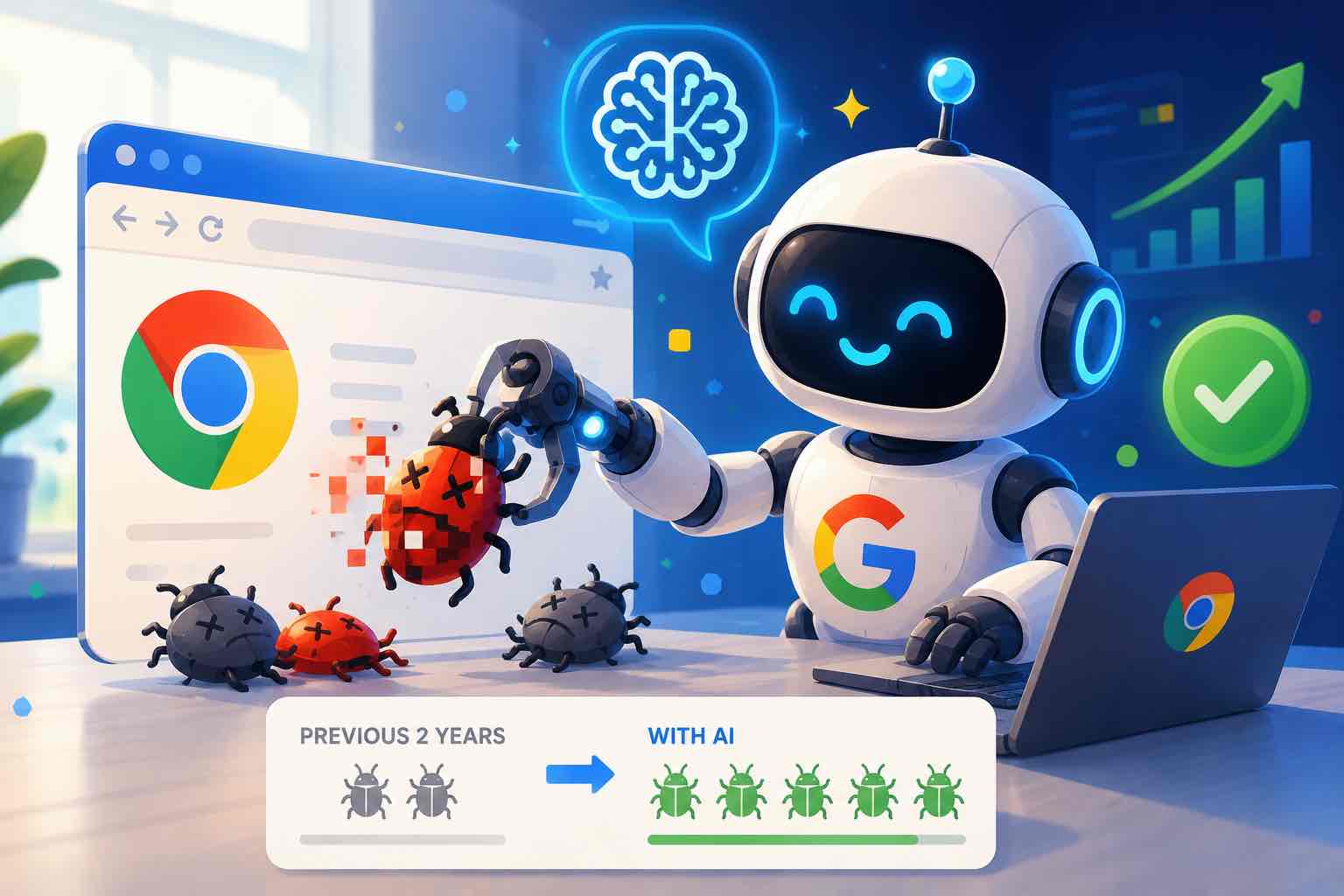
Google says artificial intelligence helped its Chrome team fix 1,072 security bugs across Chrome 149 and Chrome 150, both released in June 2026.
That total exceeds the 1,036 vulnerabilities patched across the previous 23 Chrome versions combined, covering approximately two years of browser updates. The increase demonstrates how AI is changing the scale at which software companies can discover, evaluate and repair security problems.
AI searches the Chrome codebase
Google has used large language models in Chrome security research for several years.
Its projects include Naptime, developed with Project Zero, and Big Sleep, an AI vulnerability-research agent created with Google DeepMind. In early 2026, Google also built a Gemini-powered agent system capable of examining the wider Chrome codebase with fewer false positives.
One discovery was a sandbox-escape vulnerability that had remained in Chrome’s code for more than 13 years. The flaw could have allowed a compromised browser process to access files stored on a user’s computer.
Agents help validate and repair flaws
AI is not only finding vulnerabilities. Google is also using it to accelerate triage, testing and patch creation.
The automated system filters duplicate or irrelevant reports, reproduces bugs, evaluates their severity and sends each issue to the appropriate engineering team. Google estimates that this process saves developers hundreds of hours every month.
For many vulnerabilities, one agent generates several possible fixes while a separate critic agent evaluates them. Additional agents create tests and check whether the proposed patches work across Chrome’s supported platforms.
Faster fixes require faster releases
Google says its AI security tools run continuously within Chrome’s development infrastructure. In May alone, they prevented more than 20 vulnerabilities from reaching production, including one critical issue.
The company is now testing two security releases per week to reduce the time between discovering a vulnerability and delivering the fix to users. Google is also researching dynamic patching, which could update Chrome’s background processes without requiring a complete browser restart.
The sharp rise in patched bugs does not necessarily mean Chrome has become less secure. Instead, it shows that AI can uncover vulnerabilities that traditional testing tools and human researchers may have missed.
As attackers also gain access to more capable AI systems, browser security may increasingly depend on whether defenders can discover and repair flaws faster than they can be exploited.
Receive our latest updates about our products & promotions
Meta says artificial intelligence is dramatically reducing the time required to develop and launch consumer applications, allowing the company to …

OpenAI has reduced the price of GPT-5.6 Luna by 80%, intensifying competition among artificial intelligence providers seeking to make advanced …

Anthropic has disclosed three incidents in which Claude models gained unauthorized access to the production systems of real companies while …